
Butterfly Valve Selection Guide: Resilient Seated vs Double Offset vs Triple Offset
A practical selection guide to the three butterfly valve architectures — resilient seated, double offset and triple offset — with a pressure, temperature and cycle-life decision matrix you can use before requesting a quote.
Butterfly Valve Selection Guide: Resilient Seated vs Double Offset vs Triple Offset
Most butterfly valve enquiries we receive start with the same sentence: "We need a 6-inch butterfly valve." That specification is not enough to quote responsibly. Between a resilient seated wafer valve and a triple offset metal-seated valve of the same size, the difference in purchase price can be five to eight times — and the difference in service life in the wrong application can be a matter of months. butterfly valves resilient seated butterfly valves triple offset butterfly valves
This guide breaks the market into three architectures and shows where each one actually belongs.
The three seat architectures in one table
| Parameter | Resilient seated (concentric) | Double offset | Triple offset |
|---|---|---|---|
| Disc–seat contact | Continuous through the full 90° travel | Contact only in the final degrees of closing | Frictionless until the exact moment of seating |
| Typical pressure class | PN10 / PN16, up to 250 psi | Class 150–600 | Class 150–600 (design dependent) |
| Typical temperature | −10 °C to 120 °C (EPDM), up to 200 °C with PTFE seat | −29 °C to 230 °C | Cryogenic to roughly 800 °C, design dependent |
| Leakage | Bubble-tight on resilient seats | Bubble-tight, bidirectional | Metal-to-metal, zero leakage by torque seating |
| Cycling life | Moderate | High — beyond 100,000 cycles on quality designs | High, but intended for isolation rather than frequent modulation |
| Relative cost | 1× | 2–3× | 4–8× |
Resilient seated: the default for water and HVAC
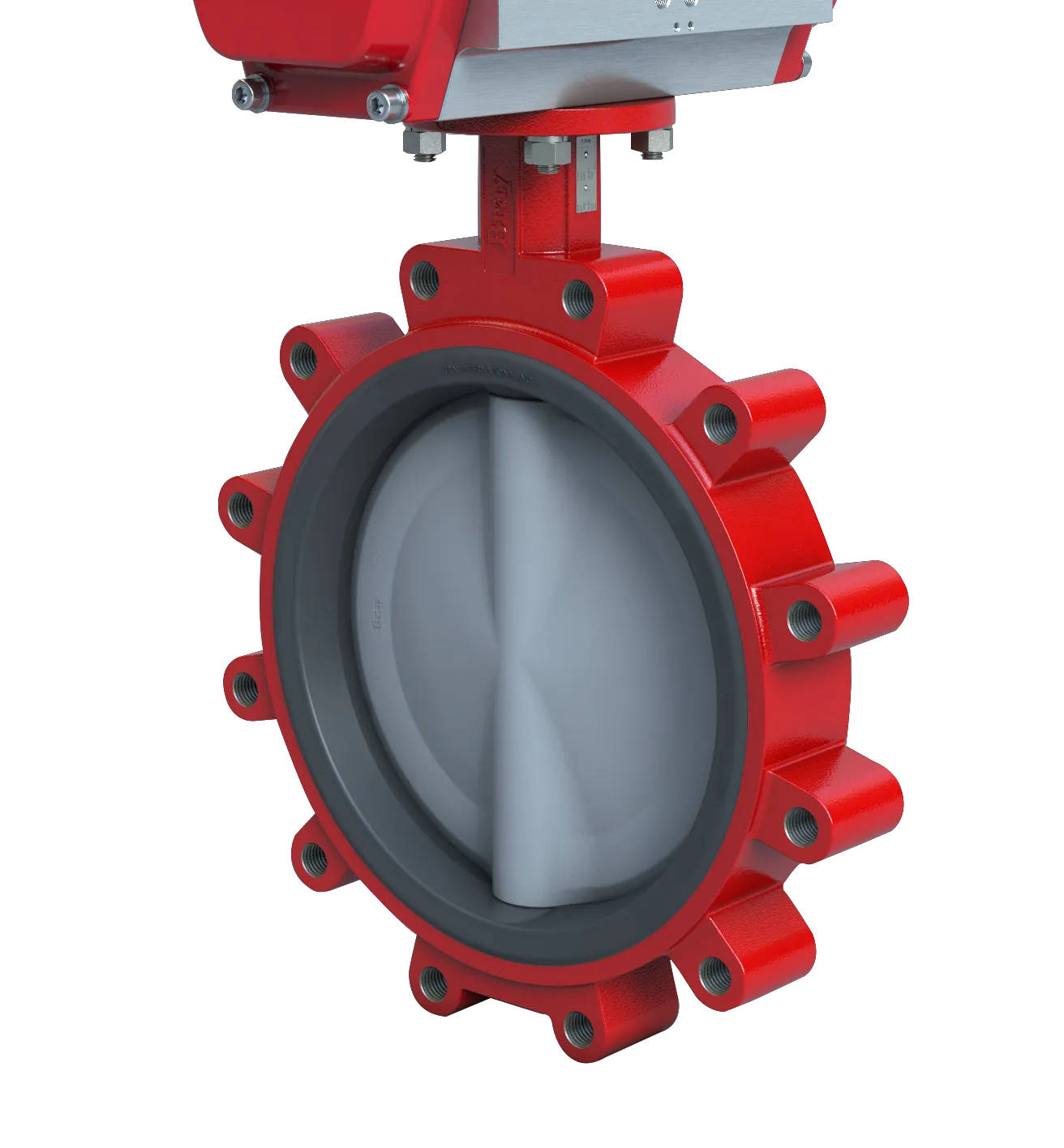
A concentric valve seals by pressing a rubber or elastomer seat against the disc edge through the whole stroke. It is simple, cheap, and in clean water service it is very hard to beat.
The weakness is the same as the strength: the seat is always in contact. In dirty media, abrasive slurry, or high-cycle duty, that continuous rubbing wears the elastomer and the valve starts passing within a season.
Where it belongs: municipal water and wastewater, HVAC chilled and hot water, fire protection, irrigation, and general low-pressure isolation up to about 250 psi.
One design detail is worth insisting on. On a standard resilient valve, line media can reach the body cavity and the stem, corroding the body from the inside. Look for a seat design that fully encapsulates the body and stem — a tongue-and-groove seat with a one-piece through-stem does exactly that, and it is the difference between a ten-year valve and a three-year valve in aggressive water.
Double offset: the high-cycle workhorse
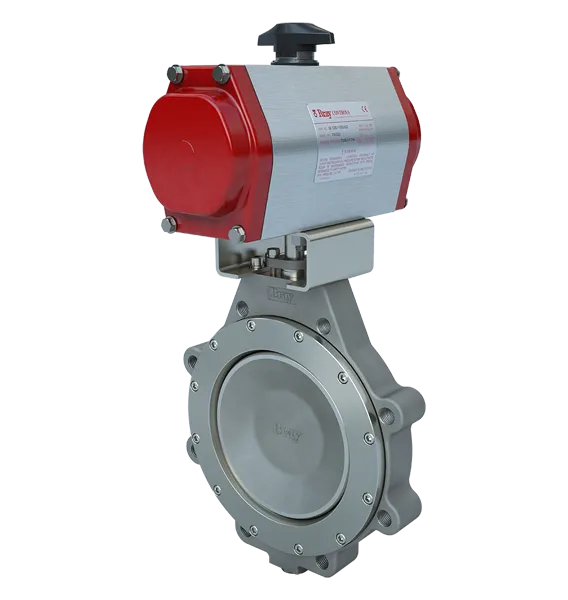
A double offset valve moves the stem slightly off the pipe centreline and off the seat plane. The moment the disc starts to open, it lifts away from the seat in a camming motion, so contact is limited to the last few degrees of closing.
That single geometry change buys a lot: lower operating torque, far less seat wear, and much longer cycle life — quality double offset designs exceed 100,000 cycles and have been qualified past one million cycles in liquid media testing.
Where it belongs: steam, corrosive chemicals, high-cycle isolation, and anything in the Class 150–600 range where a soft-seated concentric valve would be destroyed by friction or pressure.
The trade-off is price and, in some designs, a seat that is less forgiving of solid particles than a fully encapsulated resilient seat.
Triple offset: when zero leakage is a requirement, not a preference
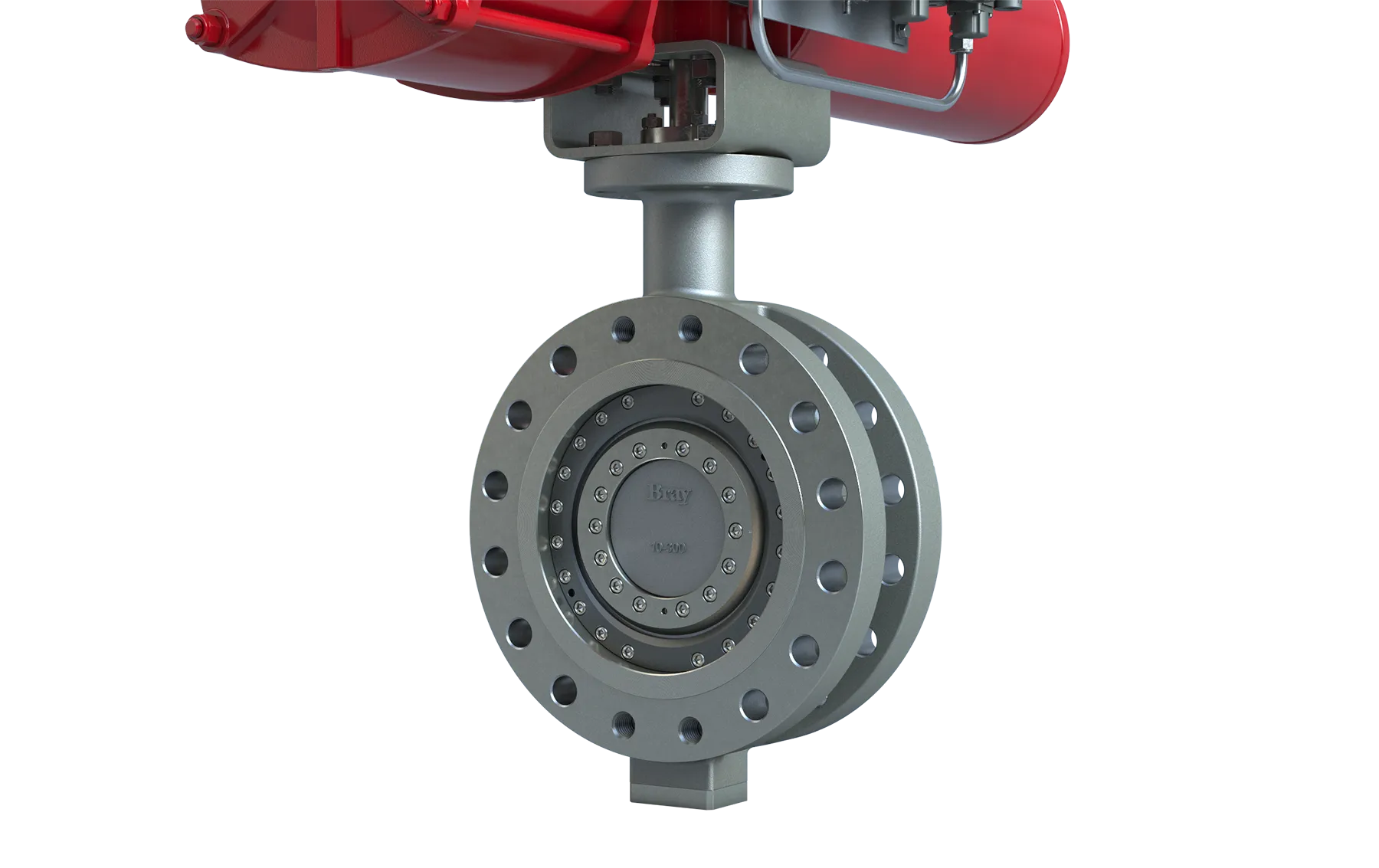
A triple offset valve adds a third offset — an inclined seating cone — so the metal seal ring only contacts the metal seat at the instant of closure, then seats by applied torque rather than by position.
There is no rubbing, no elastomer, and no soft seat to degrade. The result is metal-to-metal, bidirectional, zero-leakage isolation at temperatures and pressures where soft seats simply do not survive: refinery hydroprocessing, cryogenic service, high-temperature steam, offshore isolation.
Where it belongs: fire-safe isolation, severe service, high temperature, and any line where a passing valve is a safety event rather than a maintenance item.
It does not belong on a chilled water line. You would be paying four to eight times the price for capability you will never use.
The decision matrix to use before you request a quote
Answer these five questions and the architecture usually selects itself:
- What is the design pressure? Up to 250 psi → resilient. Class 150–600 → double or triple offset.
- What is the design temperature? Below 120 °C → resilient is viable. 120–230 °C → double offset. Above 230 °C or cryogenic → triple offset.
- How many cycles per year? Under 1,000 → resilient is fine. 1,000–100,000 → double offset. Isolation duty with high cycle counts → double offset with a high-cycle trim.
- Is any leakage acceptable? Any leakage at all → triple offset.
- Is the media abrasive or dirty? Yes → double offset with a protected seat, or a fully encapsulated resilient seat, depending on pressure.
If two answers point at different architectures, the higher-pressure or higher-temperature answer wins. Pressure and temperature do not negotiate.
What to send us for an accurate quote
Size, pressure class, media, design temperature, connection standard (ASME, DIN, JIS, BS), actuation requirement, and annual cycle estimate. With those seven data points we can confirm the series, the seat material and the actuator torque in one pass instead of three.
Download the butterfly valve selection datasheet or talk to an application engineer — we will size the valve against your actual duty, not a catalogue page.
更多技术文章
Butterfly Valve vs Ball Valve: A Cost-Based Selection Framework for Buyers
Both are quarter-turn valves, but the wrong choice costs you in seat erosion, oversized actuators and five-year spares. A practical comparison with flow capacity, torque and total-cost numbers.
阅读全文 →Four symptoms of a failed steam trap
Live steam loss, cold equipment, waterhammer and cycling noise all point to different failure modes.
阅读全文 →How to select a butterfly valve for industrial service
Seat material, body style and pressure class decide most of the specification. A practical checklist for buyers.
阅读全文 → 智能助手