
Wafer vs Lug vs Double Flanged Butterfly Valves: Which Body Style Fits Your Pipeline?
Wafer, lug and double flanged butterfly valves differ in how they mount, whether they can be removed from one side, and which flange standards they accept. Here is how to choose without creating a maintenance problem.
Wafer vs Lug vs Double Flanged Butterfly Valves: Which Body Style Fits Your Pipeline?
Three butterfly valves can share the same disc, the same seat and the same pressure rating, and still not be interchangeable. The body style decides how the valve mounts, whether it can be removed without draining the line, and which flange standards it will accept. our butterfly valve range
Getting this wrong rarely shows up at commissioning. It shows up two years later, when a maintenance team discovers they have to cut the pipe to change a seat.
The three body styles, side by side
| Feature | Wafer | Lug | Double flanged |
|---|---|---|---|
| Mounting | Clamped between two flanges by through-bolts | Bolted to each flange with its own threaded lugs | Bolted to flanges at both ends, like a flanged valve |
| Removal from one side | No — the line must be split | Yes — one side can be unbolted while the other stays live | No — both flanges must be opened |
| Dead-end / end-of-line service | Not permitted | Permitted on rated designs | Permitted |
| Face-to-face length | Shortest | Short | Longest |
| Weight | Lowest | Low | Highest |
| Relative cost | 1× | 1.2–1.5× | 1.5–2.2× |
| Best for | Tight spaces, skids, new builds | Lines needing single-side service | Retrofits, gate valve replacement, mixed flange standards |
Wafer: shortest, cheapest, least forgiving
A wafer valve is sandwiched between two pipe flanges and held by long through-bolts that pass across the valve body. It takes almost no face-to-face length, which makes it the default choice for skid-mounted equipment, packaged plant and crowded pipe racks. wafer type butterfly valves
The constraint is maintenance. To remove a wafer valve you have to split the joint and spread the flanges — which means draining and isolating both sides. On a line that will never be opened, that is fine. On a line that will be serviced, it is a recurring cost.
One more rule: a wafer valve is not a dead-end valve. If the downstream flange is removed while the upstream side is pressurised, there is nothing holding the valve in place and nothing backing the seat. Specify lug or double flanged for end-of-line duty. lug style butterfly valves
Lug: the maintenance-friendly middle ground
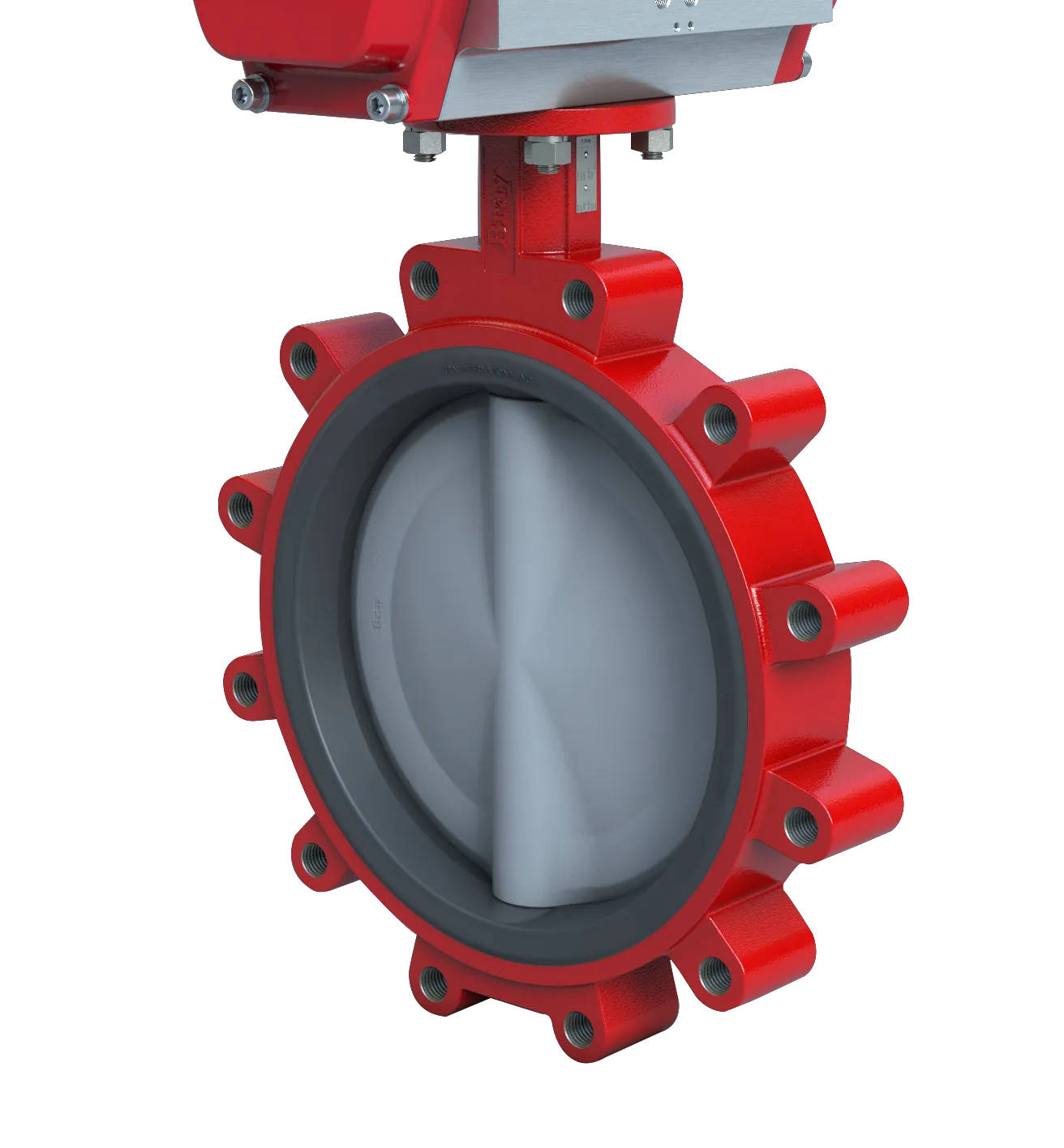
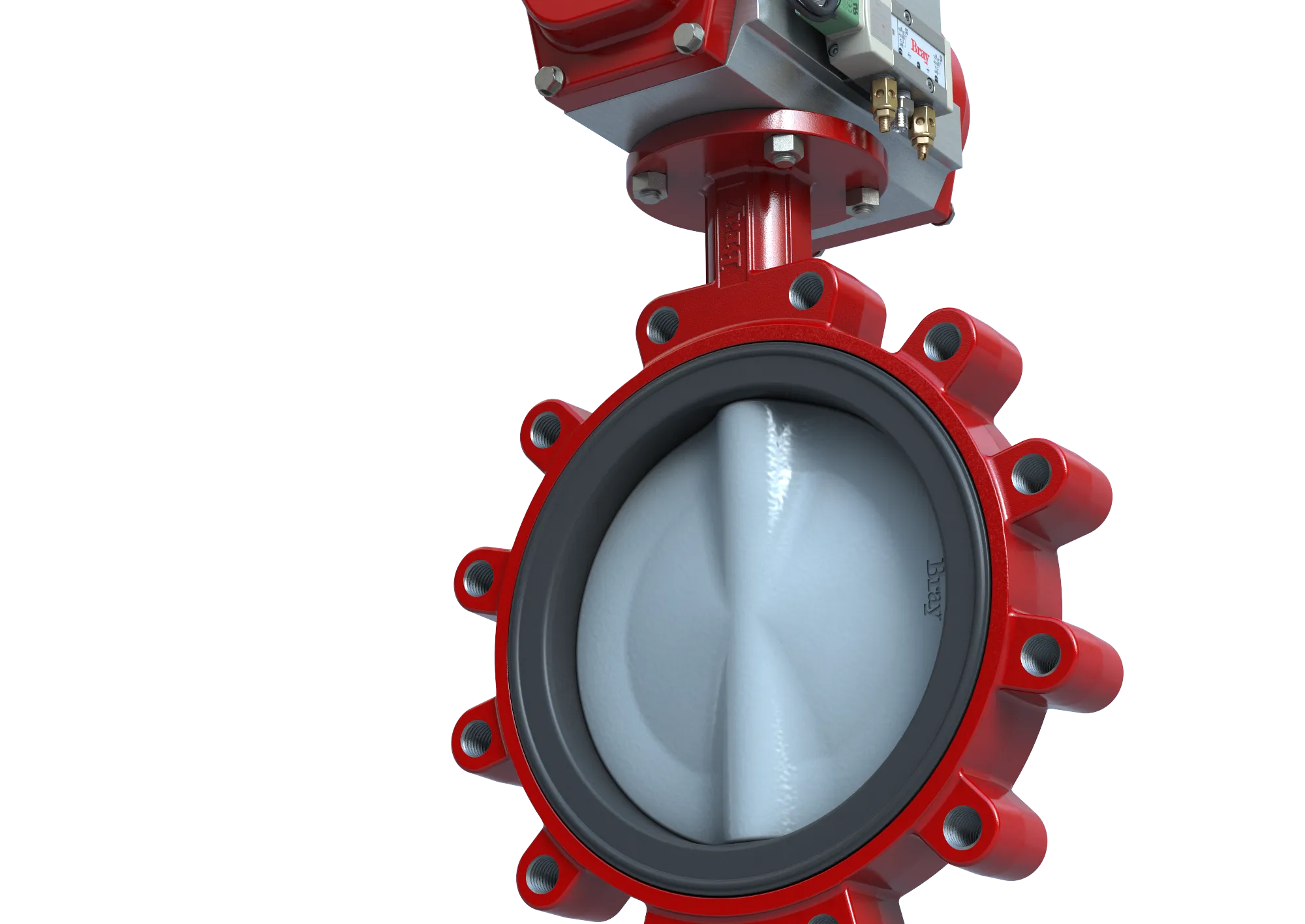
A lug valve has threaded inserts on both sides of the body. Each side bolts independently to its own flange, so you can unbolt the downstream flange, leave the upstream side live, and pull the valve out — or use it as an isolation point at the end of a line.
That capability is why lug valves dominate in water treatment, pump stations and anywhere a maintenance team expects to work on the valve without shutting down the whole header.
The cost premium over wafer is modest, and it buys a capability that is very expensive to retrofit later.
Double flanged: the retrofit and replacement choice
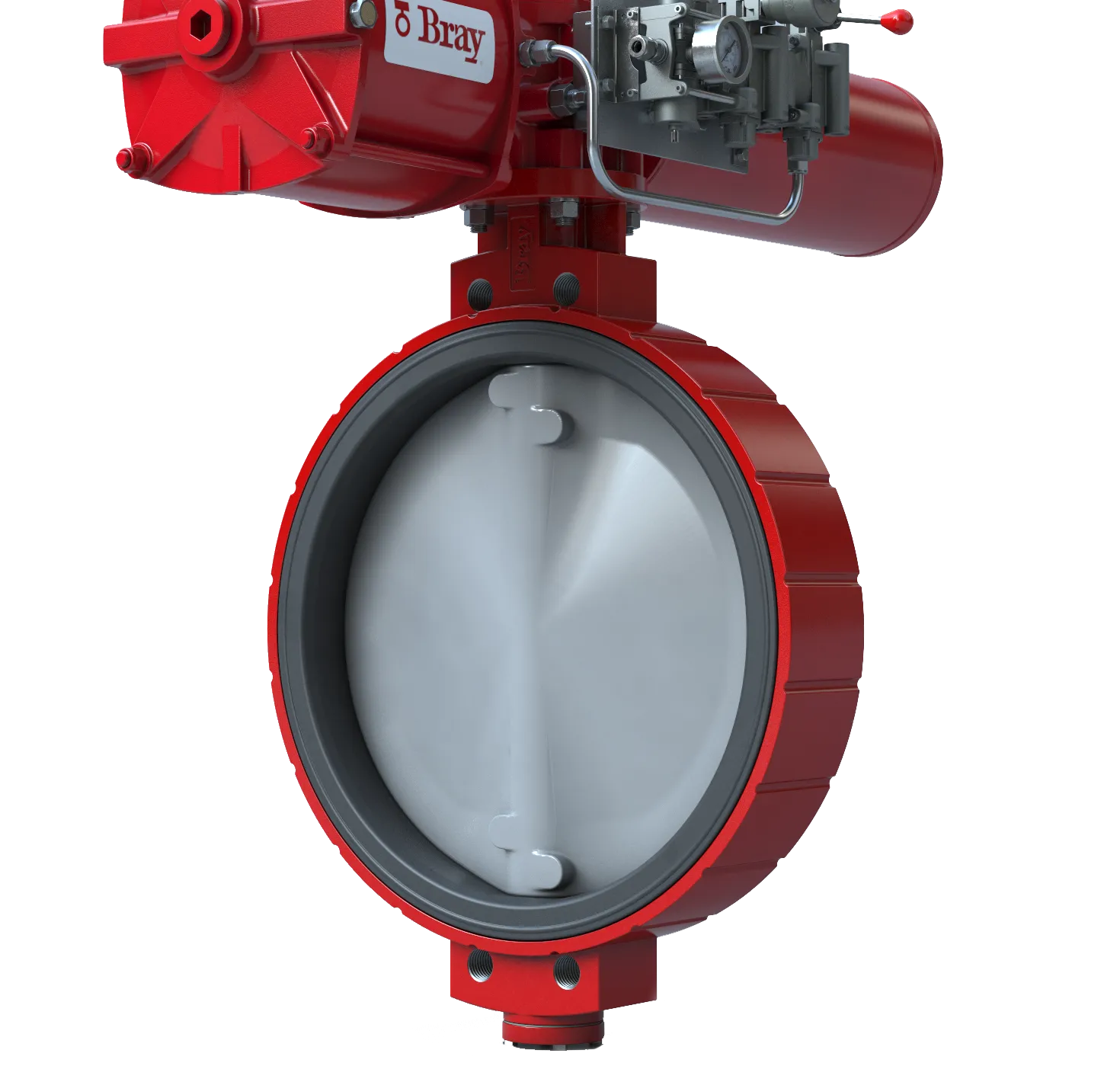
A double flanged valve has a flange at each end and a face-to-face length close to a gate valve of the same size. That makes it the natural replacement for an existing gate or globe valve: the pipe spool does not have to change. replacing an existing gate valve
It also solves the flange-standard problem. A double flanged body can be drilled to suit ASME Class 125/150, BS 10 Table D/E, BS 4504 NP10/16, DIN ND10/16, AS 2129 and JIS 10, so one valve design covers a project with mixed piping standards — common in Southeast Asian brownfield plants.
You pay for it in weight, length and price. On new large-diameter pipework where space is tight, wafer or lug is usually the better economics.
A four-question selection check
- Will anyone ever remove this valve while the line is live? Yes → lug or double flanged. No → wafer is acceptable.
- Is this the end of a line? Yes → lug (rated for dead-end) or double flanged. Never wafer.
- Are you replacing an existing gate valve without changing the pipe? Yes → double flanged.
- Is face-to-face length or weight the binding constraint? Yes → wafer.
If the answers conflict, resolve them in this order: safety (dead-end capability), then maintenance access, then space, then cost.
Two installation details that cause most field failures
Bolt length. Wafer valves need through-bolts long enough to span both flanges plus the valve body. Short bolts load the threads, not the flange faces, and leak.
Flange face alignment. Butterfly valve seats seal against the flange face. A misaligned or damaged flange face, or a spiral-wound gasket added "just in case", will cause a leak that no amount of bolt torque will fix. The seat is the gasket — do not add one.
Download the body style selection sheet or send us your pipe specification — we will confirm the body style, flange drilling and bolt set in one reply.
Productos relacionados
¿Necesita ayuda con una especificación?
Envíe las condiciones de servicio y confirmaremos el modelo, los materiales y el plazo de entrega.
Solicitar cotizaciónMás notas técnicas
How to Size a Pneumatic Actuator for a Butterfly Valve: A Torque Calculation Walkthrough
Most actuator failures are sizing failures. A step-by-step torque calculation for butterfly valves — break torque, media and temperature factors, safety margin, air supply derating and spring-return checks — with a worked example.
Leer el artículo →Triple Offset Butterfly Valve: When Metal-Seated Zero Leakage Is Worth the Cost
A triple offset valve costs four to eight times a resilient seated valve. Here is the geometry that justifies it, the six service conditions that require it, and the three specification mistakes that destroy it in the field.
Leer el artículo →Fire Protection Butterfly Valves: UL/FM Listing, Grooved Ends and the Details Inspectors Look For
A fire protection valve is not a process valve with a red body. Listing, supervisory switches, end connections and installation rules all differ — and the failures show up at inspection, not at commissioning.
Leer el artículo → Asistente IA