
Triple Offset Butterfly Valve: When Metal-Seated Zero Leakage Is Worth the Cost
A triple offset valve costs four to eight times a resilient seated valve. Here is the geometry that justifies it, the six service conditions that require it, and the three specification mistakes that destroy it in the field.
Triple Offset Butterfly Valve: When Metal-Seated Zero Leakage Is Worth the Cost
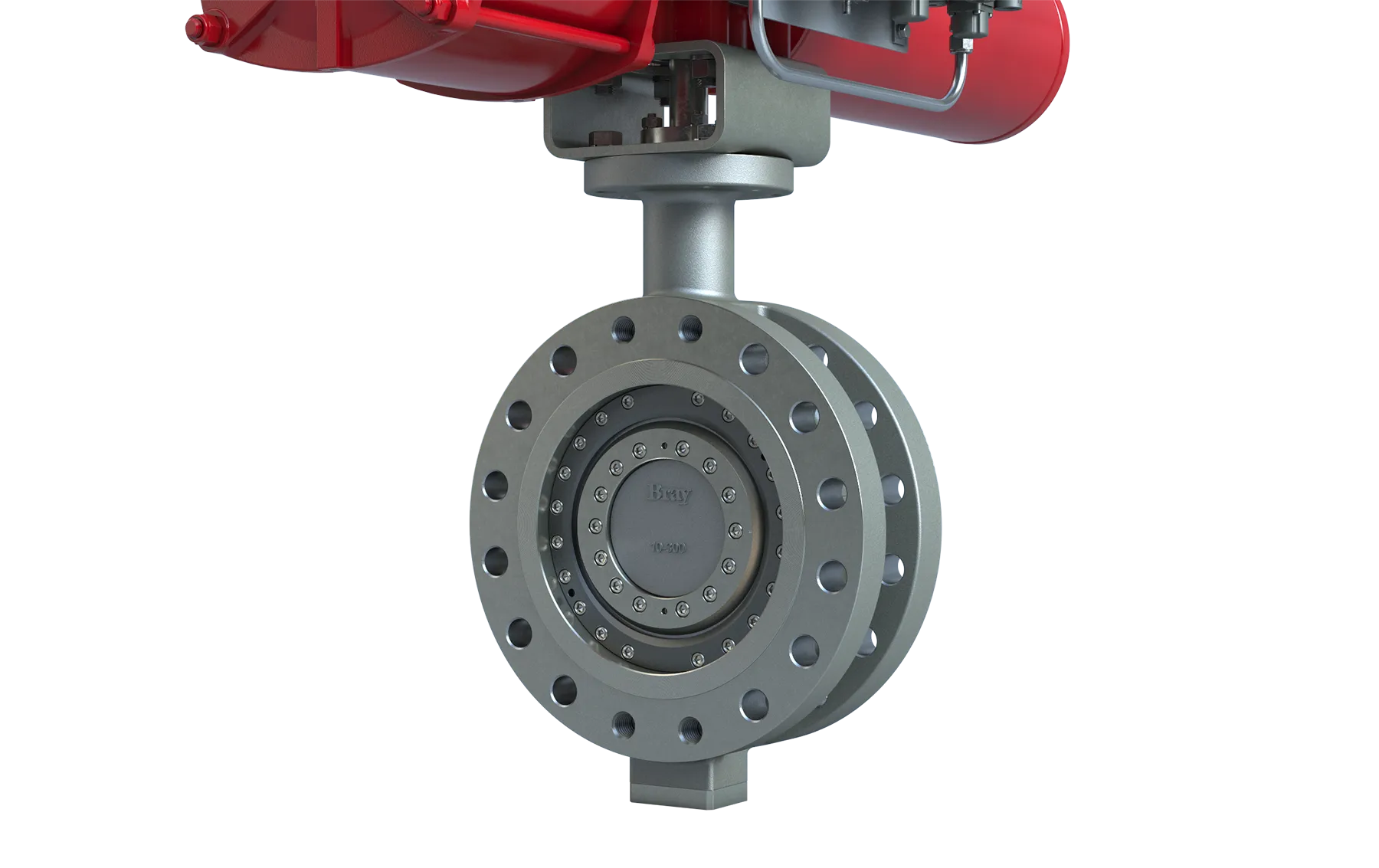
A triple offset butterfly valve is the most expensive quarter-turn isolation valve most plants will buy. It is also the only type that delivers metal-to-metal, bidirectional, zero-leakage shut-off at temperatures where every elastomer has already failed. triple offset butterfly valves butterfly valve range
The question is never "is it better". It is "does my line actually need it" — and if yes, "am I specifying it correctly".
The geometry in plain terms
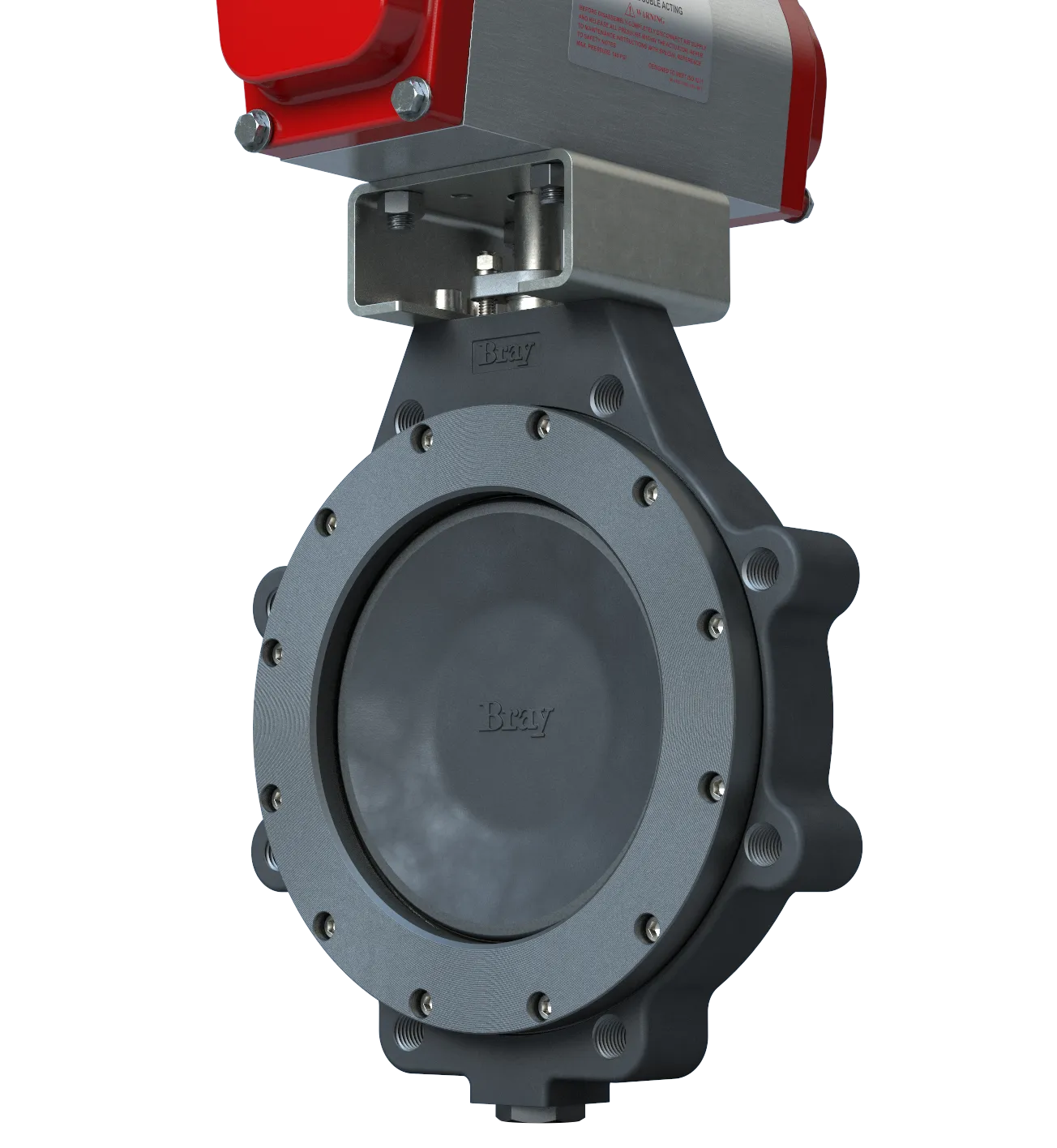
A concentric valve has no offset: the disc rotates about the pipe centreline and rubs the seat through the full stroke.
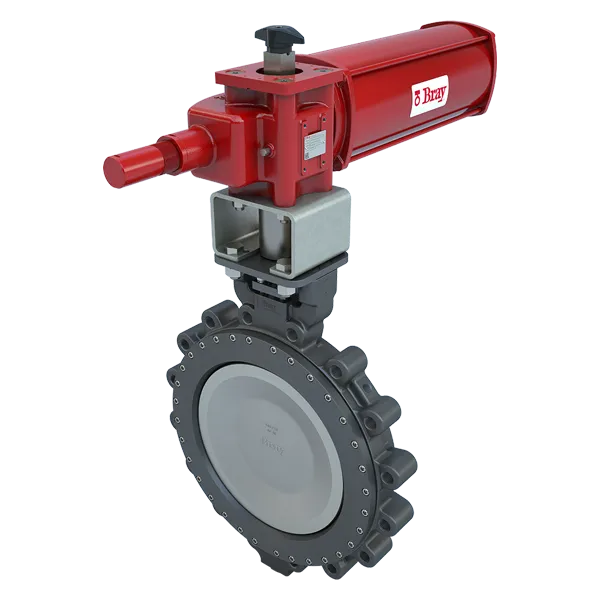
A double offset adds two offsets — the stem is moved behind the seat plane and off the pipe centreline — so the disc cams away from the seat as it opens. double offset butterfly valves
A triple offset adds a third: the seating surface is a cone whose axis is inclined to the pipe axis. The result is that the metal seal ring approaches the seat at an angle and only makes contact at the instant of full closure. There is no sliding contact at all.
Because contact happens only at closure, the seal cannot be achieved by position alone. The valve is torque-seated: the actuator applies mechanical force to press the seal ring onto the seat. That single characteristic drives most of the specification rules below.
Six conditions that require a triple offset
- Design temperature above roughly 230 °C, or cryogenic service. No elastomer survives; metal seats do.
- Fire-safe isolation is mandatory. Metal-to-metal seating with a fire-tested design is the defensible answer for hydrocarbon service.
- Zero leakage is a safety requirement, not a preference. Toxic media, hydrogen, high-pressure steam, offshore isolation.
- Abrasive or particle-laden media at high differential pressure. No soft seat to cut or embed particles.
- Severe thermal cycling. Splined disc-to-stem connections tolerate expansion where pinned or keyed joints loosen.
- Long isolation intervals with no maintenance access. The valve may sit in one position for years and must still seal on demand.
Four conditions where it is the wrong purchase
- Chilled water, HVAC, municipal water at PN16. A resilient seated or double offset valve does the job at a fraction of the price.
- Frequent modulating control. Triple offset valves are isolation devices. Continuous throttling wears the seat interface and is not what the design is for — use a control valve.
- Dirty media with large solids. Metal-to-metal seats tolerate particles better than elastomers, but a large solid caught at closure can still damage the sealing surface. A knife gate or a different design may be better.
- Very tight budget with low consequence of leakage. If a few drops are acceptable, you are buying capability you will not use.
What actually drives the price
The valve body is not the expensive part. The cost sits in:
- Seat and seal geometry: the conical sealing surface has to be machined and matched to very tight tolerance.
- Materials: the seal ring and seat are usually a hard-faced or solid corrosion-resistant alloy.
- Actuator torque: torque seating requires higher closing torque than a soft-seated valve, so the actuator and its mounting interface are larger.
- Testing: a zero-leakage claim has to be proven per unit, not per batch.
When comparing quotes, compare the valve plus actuator plus testing as one package. A cheap triple offset body with an undersized actuator will not seal, and that failure will be blamed on the valve.
Three specification mistakes that destroy it in the field
Mistake 1: sizing the actuator for opening torque only. A torque-seated valve needs enough closing torque to seat the seal. Undersized actuators produce a valve that looks closed, passes leak-by, and gets "fixed" by over-torquing the next one.
Mistake 2: ignoring the differential pressure direction. Many triple offset designs are bidirectional, but the torque required differs with flow direction. State the design differential pressure and its direction in the datasheet, not just the line pressure.
Mistake 3: treating it like a position-seated valve during commissioning. Operators used to soft-seated valves sometimes stop the actuator at "visually closed". A triple offset valve must be allowed to travel to its mechanical stop so the torque can be applied. Set the travel limits per the manufacturer's procedure, not by eye.
A quick cost-of-ownership view
Take a high-temperature steam isolation point that currently uses a soft-seated valve rebuilt every 14 months. Over five years that is roughly four rebuilds, four isolation events, four production interruptions, plus the risk of a passing valve between rebuilds.
A triple offset valve at four to eight times the purchase price, with a service interval measured in years rather than months, usually wins that comparison before the third year. On a chilled water line with a ten-year soft-seat life, it never wins.
The calculation is not about the valve. It is about how often you have to stop the plant.
What to send for a correct quotation
Media, design pressure and differential pressure with direction, design and maximum temperature, cycle frequency, required leakage class, fire-safe requirement, actuator type and available air or power supply, and the connection standard.
Download the triple offset specification checklist or send us the line data sheet — we will confirm the seat material, torque and actuator in one pass.
Related products
Need help with a specification?
Send the duty conditions and we will confirm the model, materials and lead time.
Request a quoteMore technical notes
How to Size a Pneumatic Actuator for a Butterfly Valve: A Torque Calculation Walkthrough
Most actuator failures are sizing failures. A step-by-step torque calculation for butterfly valves — break torque, media and temperature factors, safety margin, air supply derating and spring-return checks — with a worked example.
Read article →Fire Protection Butterfly Valves: UL/FM Listing, Grooved Ends and the Details Inspectors Look For
A fire protection valve is not a process valve with a red body. Listing, supervisory switches, end connections and installation rules all differ — and the failures show up at inspection, not at commissioning.
Read article →Valve Certifications Explained: API 607, NSF/ANSI 61, SIL, ATEX, PED and NACE
Six certificates cover most valve tenders, and they answer six completely different questions. What each one actually proves, what it does not prove, and the five misreadings that cost projects money.
Read article → AI Assistant