
Butterfly Valve vs Ball Valve: A Cost-Based Selection Framework for Buyers
Both are quarter-turn valves, but the wrong choice costs you in seat erosion, oversized actuators and five-year spares. A practical comparison with flow capacity, torque and total-cost numbers.
Butterfly Valve vs Ball Valve: A Cost-Based Selection Framework for Buyers
Both valves isolate a line in a quarter turn. Both are available in the same materials. Yet in most projects one of them is clearly wrong, and the wrong choice usually announces itself within the first year — as seat erosion, a passing valve on a gas line, or an actuator that had to be sized two frame sizes larger than the budget allowed.
This article gives you the selection logic we apply to incoming enquiries, with the numbers that actually drive the decision.
The 60-second answer
| If your priority is… | Choose |
|---|---|
| Bubble-tight shut-off, gas service, small sizes (DN10–DN100) | Ball valve |
| Large diameter (DN150+), tight budget, limited space | Butterfly valve |
| Throttling or modulating control | Butterfly valve (ball valves are for on/off) |
| High pressure (Class 300+) | Ball valve |
| Abrasive slurry at high cycle counts | Neither standard type — specify a high-cycle or severe-service design |
Where the two designs actually differ
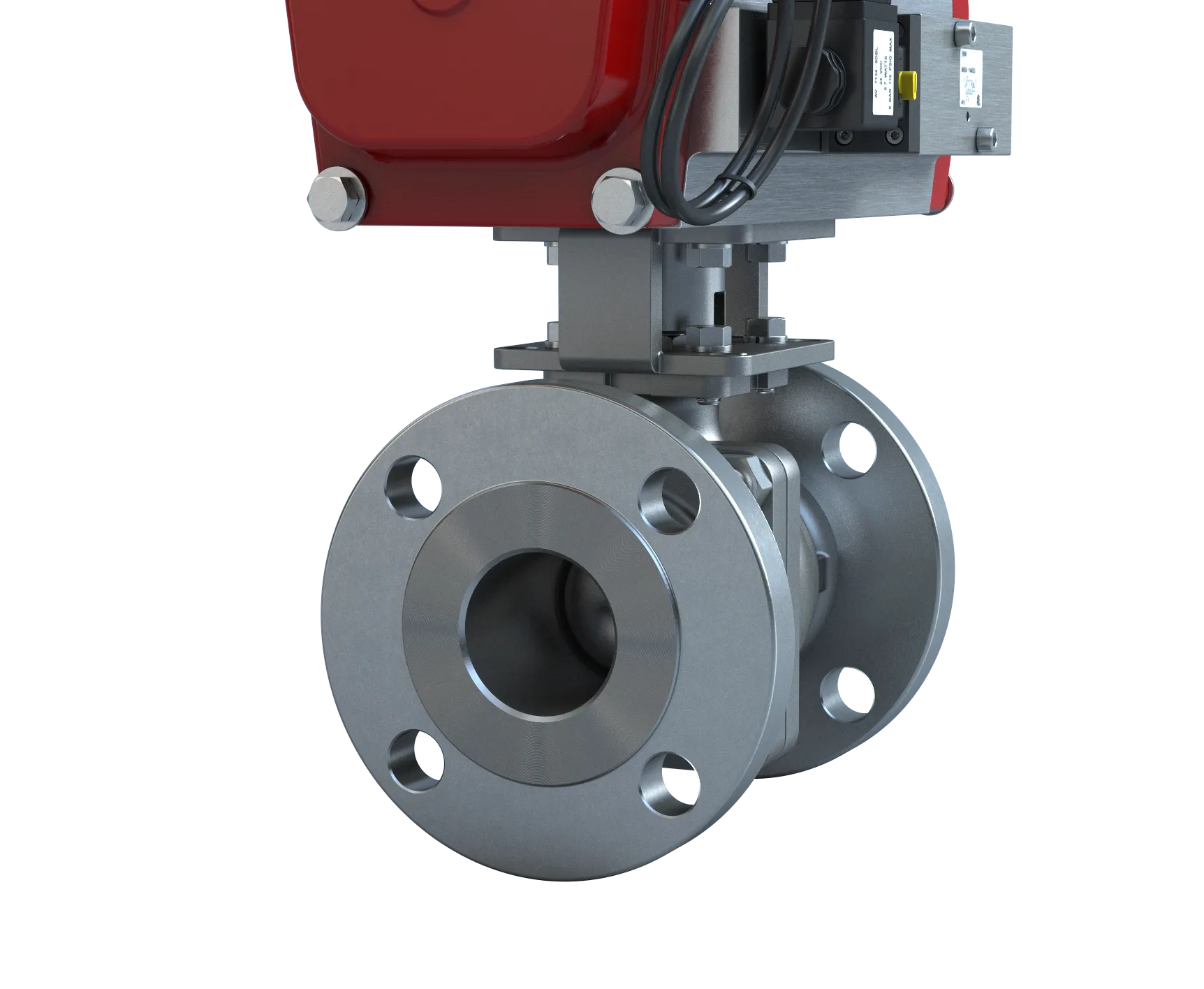
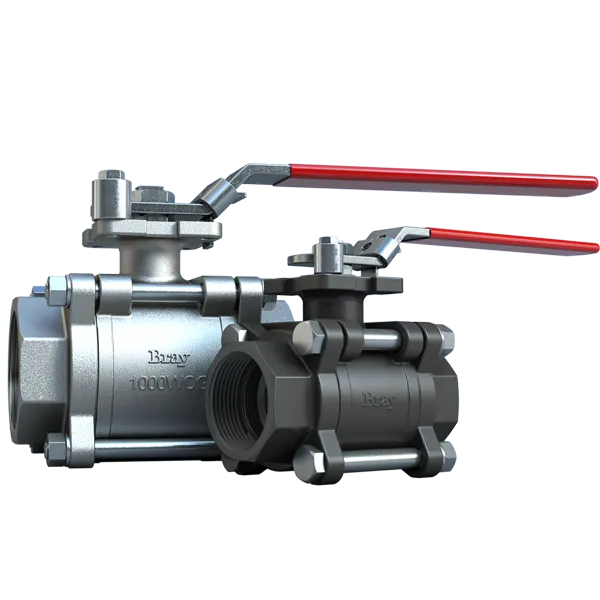
A ball valve rotates a bored sphere. When open, the bore lines up with the pipe and the flow path is essentially a straight section of pipe — full port designs add almost no pressure drop. ball valves flanged ball valves
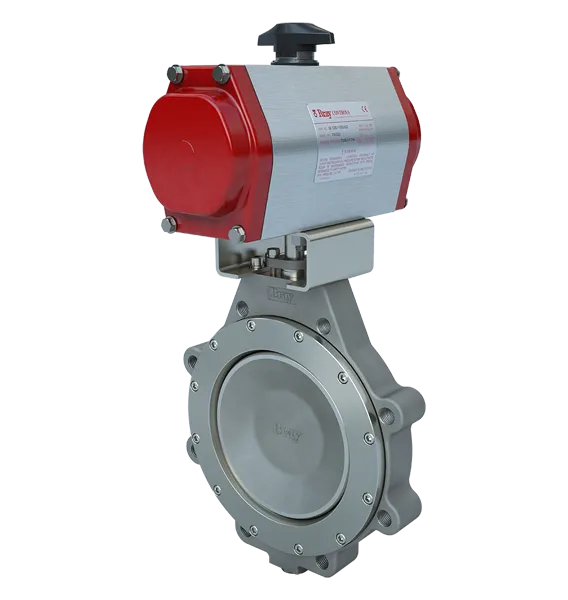
A butterfly valve rotates a disc that stays in the flow path even when fully open. That disc is the source of every advantage and every disadvantage: it is light, short and cheap, and it always creates some obstruction. butterfly valve options
Flow capacity: the number buyers underestimate
Typical fully-open flow coefficients at DN100, from published market data:
| DN100 valve | Typical Kv (fully open) |
|---|---|
| Full-port ball valve | 380–450 |
| Concentric butterfly valve | 220–300 |
Worked example. You need 100 m³/h of water and want the valve's permanent pressure loss kept under 0.1 bar:
Required Kv = Q ÷ √ΔP = 100 ÷ √0.1 ≈ 316
A full-port ball valve at Kv 400 passes comfortably. A concentric butterfly at Kv 250 does not — you would have to go to DN125 or accept a higher pressure loss and higher pumping energy for the life of the plant.
That is the trade: the butterfly valve saves on purchase price and gives some of it back in pumping cost. On a large cooling water loop running 8,000 hours a year, model both before deciding.
Torque and actuator cost: the hidden line item
Typical break torque at DN100:
| DN100 valve | Typical break torque |
|---|---|
| Concentric butterfly valve | 30–40 Nm |
| Floating ball valve | 70–90 Nm |
Size the actuator at break torque × 1.25–1.5 to allow for media, deposit build-up and seat ageing. In practice a ball valve frequently needs an actuator one frame size larger than the butterfly valve next to it — which is where a 2–3× actuator price gap comes from, and where skid weight and panel space start to matter.
Purchase price versus five-year cost
Market reference points for a 12-inch soft-seated valve: a butterfly valve sits around a few hundred US dollars, a comparable ball valve around five times that. The gap widens with size — at 24 inches it can reach 8–10×.
But purchase price is only one line. A five-year comparison should include:
- Valve purchase price
- Actuator and accessories (torque-driven)
- Pipe supports (weight-driven — a 24-inch butterfly can weigh about what a 6-inch ball valve weighs)
- Installation labour and space
- Seat/spares replacement cost and frequency
- Pumping energy (pressure drop)
- Downtime cost per intervention
On large-diameter low-pressure water, butterfly wins on items 1–5 and usually loses on 6. On small-diameter high-pressure gas, ball wins on everything that matters.
Where each one fails in service
Butterfly valve failure modes: seat and liner wear in dirty media, stem seal leakage, cavitation damage when throttled at high differential pressure, and seat damage from solid particles trapped at closure.
Ball valve failure modes: seat scoring from abrasive media, packing leakage, and — the expensive one — using a ball valve for throttling, which puts high-velocity flow across a partially open seat and erodes it in months.
Maintenance access is a real differentiator
A butterfly valve seat can often be replaced in line in 15–30 minutes without special tooling. A ball valve usually needs to come out of the line for seat work, which takes longer and requires isolation on both sides.
If your maintenance team works without a spare line, that difference alone can decide the project.
The decision tree we use
- Pressure above Class 300? → Ball valve.
- Size DN150 or larger? → Lean butterfly; check pressure and leakage requirement.
- Zero leakage mandatory (toxic, gas, expensive product)? → Ball valve.
- Will the valve modulate? → Butterfly, or a dedicated control valve. Never a standard ball valve.
- Is space or weight the binding constraint? → Butterfly.
- Is the line pigged? → Full-port ball valve only.
If you land on both columns, the usual answer is a hybrid system: ball valves on the critical small-bore and high-pressure isolation points, butterfly valves on the large-diameter low-pressure runs. Most plants do exactly that.
Send us your line list and we will mark each line with the recommended type, pressure class and actuator torque — no obligation.
관련 제품
더 많은 기술 노트
Butterfly Valve Selection Guide: Resilient Seated vs Double Offset vs Triple Offset
A practical selection guide to the three butterfly valve architectures — resilient seated, double offset and triple offset — with a pressure, temperature and cycle-life decision matrix you can use before requesting a quote.
글 읽기 →Four symptoms of a failed steam trap
Live steam loss, cold equipment, waterhammer and cycling noise all point to different failure modes.
글 읽기 →How to select a butterfly valve for industrial service
Seat material, body style and pressure class decide most of the specification. A practical checklist for buyers.
글 읽기 → AI 어시스턴트