
Why Butterfly Valve Seats Fail Early — and the Five Design Features That Prevent It
Most premature butterfly valve failures are not manufacturing defects — they are predictable consequences of seat geometry, media ingress and friction. Here are the five design features that separate a three-year valve from a fifteen-year valve.
Why Butterfly Valve Seats Fail Early — and the Five Design Features That Prevent It
When a butterfly valve starts passing after eighteen months, the first reaction is usually "bad batch". In most cases it is not. It is the predictable outcome of a seat geometry that was never designed for that duty. the valves we manufacture in this category
We have reviewed enough failed valves to see the same five failure patterns repeating. Each one has a known design answer.
Failure pattern 1: media reaches the body and the stem
In a conventional resilient seated valve, line media can migrate between the seat and the body, then between the body and the stem. In chlorinated or slightly aggressive water this shows up as internal corrosion of a body that looks perfect from outside. In chemical service it shows up as stem seizure.
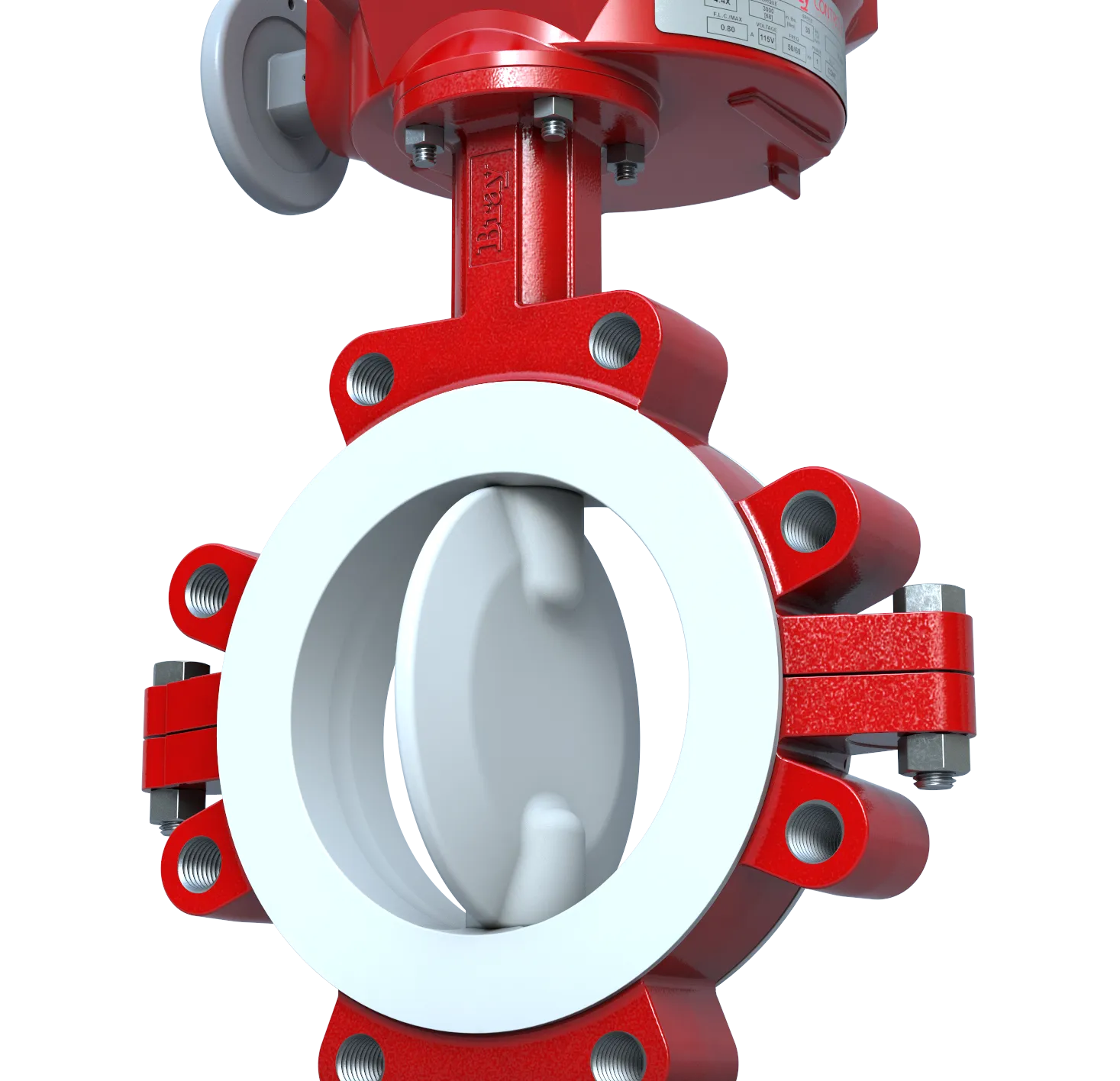
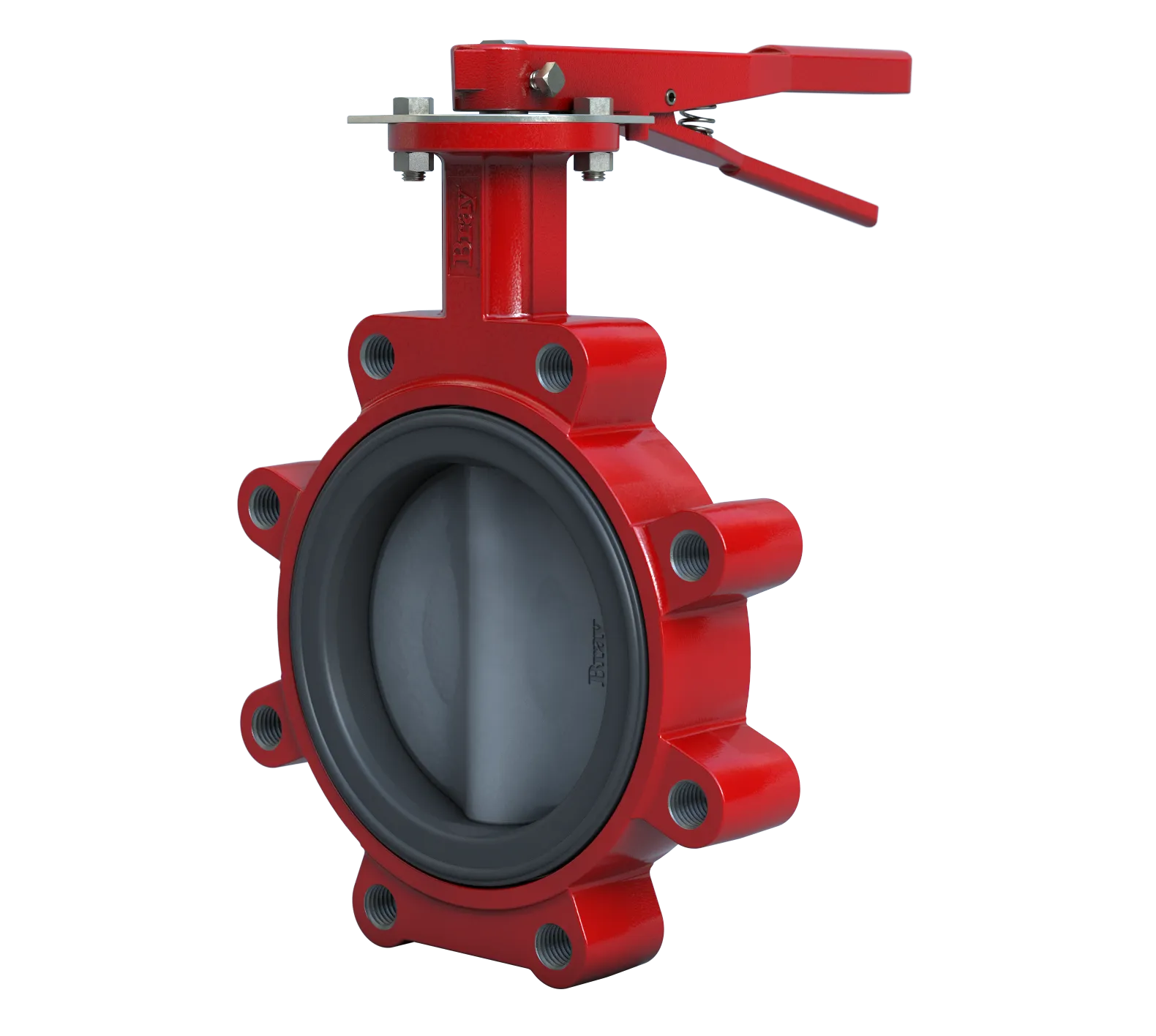
Design answer: total media encapsulation. A tongue-and-groove seat that locks into the body and a one-piece through-stem create a primary and a secondary seal, so the body cavity and stem never see the line media. This is the single biggest life extension available on a low-pressure valve, and it costs almost nothing at the purchase stage.
Failure pattern 2: the seat rubs through the whole stroke
In a concentric valve the disc presses on the seat from 0° to 90°. Every cycle removes a little elastomer. At 1,500 cycles a day — normal for a pulp dilution or filter backwash line — that is half a million cycles a year of continuous abrasion.
Design answer: offset geometry. A double offset design moves the stem off the seat plane, so the disc lifts away in a camming motion as soon as it opens. Contact is limited to the last few degrees of closing. Seat life moves from tens of thousands of cycles to beyond 100,000, and qualified designs have run past one million cycles in liquid media testing.
Failure pattern 3: solids get trapped at closure
Any particle caught between disc and seat at the moment of closing either embeds in the elastomer or scores a metal seat. In slurry, lime dosing, or poorly filtered water, this is the dominant failure mode.
Design answer: a seat retainer plus a flush-friendly seat profile. A retainer shields the seat edge from the bulk flow, and a seat profile that allows solids to be swept clear on each cycle prevents build-up. In high-solids service, a disc coating such as electroless nickel or nylon 11 also reduces adhesion.
Failure pattern 4: the elastomer is chemically wrong for the media
EPDM, Buna-N, PTFE and FKM behave very differently in the same fluid. EPDM is excellent in water and steam but poor in oils and hydrocarbons. Buna-N handles oils but not ketones. PTFE is broad but creeps under load.
Design answer: seat material selected against the actual media, not the catalogue default. This sounds trivial and is the most common specification error we see. If the line carries chlorine dioxide, solvents, or hot hydrocarbons, ask for the seat material compatibility table before the price.
For genuinely aggressive chemical service, a PFA-lined butterfly valve with a titanium disc and an FKM backup liner is often the economic answer — one published pulp mill case ran 1.22 million cycles over 2 years and 4 months in chlorine dioxide service after the previous all-titanium valve needed rebuilding every year.
Failure pattern 5: pressure or temperature beyond the seat's real limit
A resilient seat rated to 120 °C will not fail at 121 °C. It will soften, take a compression set, and stop sealing at 135 °C. The same applies to pressure: a valve rated at 175 psi that sees 200 psi water hammer events will lose its seat long before its rated cycle life.
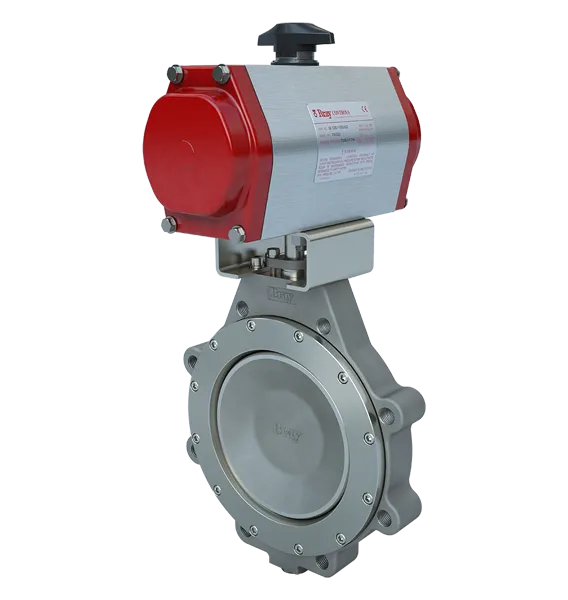
Design answer: specify the design condition, not the nominal condition. Give us the maximum surge pressure and the maximum temperature, not the operating average. Where the real condition exceeds a resilient seat's capability, move up to a double offset with a PTFE seat, or to a metal-seated triple offset. metal seated design for severe service triple offset butterfly valves
How to check a valve against these five points before you buy
Ask for these five answers in writing:
- Does the seat fully encapsulate the body and stem? Show the cross-section.
- What is the disc-to-seat contact geometry — continuous or offset?
- Is there a seat retainer, and what is the seat profile at closure?
- What is the seat material, and what is its compatibility rating against my media?
- What are the certified pressure and temperature limits, including surge?
A supplier who can answer all five in one reply is selling an engineered valve. A supplier who answers only the first three is selling a catalogue item.
What this means for total cost
A valve that fails in year two does not just cost a replacement seat. It costs the isolation, the drainage, the labour, the production interruption and the credibility of the maintenance plan. In most plants the valve is the cheapest part of that event.
Download the seat design comparison sheet or send us a failed valve photo and the service conditions — we will tell you which of the five patterns applies.
Похожие товары
Нужна помощь с техническим заданием?
Отправьте условия работы, и мы подтвердим модель, материалы и срок поставки.
Запросить предложениеДругие технические заметки
How to Size a Pneumatic Actuator for a Butterfly Valve: A Torque Calculation Walkthrough
Most actuator failures are sizing failures. A step-by-step torque calculation for butterfly valves — break torque, media and temperature factors, safety margin, air supply derating and spring-return checks — with a worked example.
Читать статью →Triple Offset Butterfly Valve: When Metal-Seated Zero Leakage Is Worth the Cost
A triple offset valve costs four to eight times a resilient seated valve. Here is the geometry that justifies it, the six service conditions that require it, and the three specification mistakes that destroy it in the field.
Читать статью →Fire Protection Butterfly Valves: UL/FM Listing, Grooved Ends and the Details Inspectors Look For
A fire protection valve is not a process valve with a red body. Listing, supervisory switches, end connections and installation rules all differ — and the failures show up at inspection, not at commissioning.
Читать статью → ИИ-ассистент